This guide explains how to find, buy, insure and register a vehicle in Germany. It also explains everything you must do after you get a car or motorcycle.
Important knowledge
Do you need a car?
In Berlin, you don’t need a car. Car ownership is expensive. Driving in Berlin is not fun: there is too much traffic, and it’s hard to find a parking space.
Use public transit or buy a bicycle. You can also rent a car when you need it. It’s better, cheaper and often faster. A car is useful for travelling outside of Berlin or moving big things.
Cost of ownership
After you buy a car, you must pay for car insurance, vehicle tax, inspections, maintenance, parking and fuel. Plan at least €100 per month just to own a car, without fuel and maintenance. It might be cheaper to rent a car when you need one.
Driving licence
To drive in Germany, you need a driving licence. EU and EEA driving licences are valid until they expire. Driving licences from non-EEA countries are valid for 6 months after moving to Germany. After 6 months, you must convert your driving licence or get a new driving licence.
Registration papers
Vehicles come with registration papers. These papers prove that you own this vehicle. They are updated when you register the vehicle, and after each inspection.
Don’t buy a vehicle without registration papers. It’s really hard to register a vehicle without papers. If you can’t register it, you can’t drive it.
Licence plates
You must get licence plates when you register the vehicle. You can’t drive a vehicle without licence plates.
There are special types of licence plates:
- Temporary licence plates (Kurzzeitkennzeichen)
They let you test drive a vehicle that is deregistered (Abgemeldet). They are only valid for a few days.12 - Seasonal plates (Saisonkennzeichen)
They only let you drive during certain months. For example, they might only let you ride your motorcycle during the summer. They make your car insurance cheaper; you only pay for the months that you can drive. Outside of those months, you can’t drive your vehicle, and you can’t park it on the street. - Insurance plates (Versicherungskennzeichen)
You don’t need to register scooters (🛴 and 🛵) under 50cc. Instead of licence plates, you get insurance plates from your insurer.6
Vehicle inspection
Cars and motorcycles must be inspected every 2 years. This is called the Hauptuntersuchung, HU or TÜV. You must bring your vehicle to a TÜV, Dekra or KÜS garage, and they check if it’s safe to drive. It costs around €150.
If your vehicle passes the inspection, you get a sticker for your licence plate, and updated registration papers. If it fails the inspection, you can’t register it, and you can’t drive it on German roads.
Vehicles are cheaper when their inspection is almost due, and much cheaper when it’s overdue (TÜV abgelaufen). A recent inspection shows that the vehicle is in good condition, and safe to drive.
Car listings on Mobile.de and Kleinanzeigen show the next inspection date.
Low-emission zones
In Berlin, the area inside the Ringbahn is a low-emission zone. To drive in an Umweltzone, your car needs a green sticker. You get it when you register your vehicle. You can also buy it in garages and gas stations. Motorcycles don’t need this sticker.
Diesel vehicles are banned from low-emission zones in some cities (but not Berlin).13 Motorcycles are always allowed.
1. Look at vehicles
Use Mobile.de and Kleinanzeigen to find cars. It’s where almost everyone sells their car. Most dealerships list their cars on those websites.
When you find a car you like, contact the seller, schedule a visit, and see the vehicle in person. You can usually go on a test drive. You can’t always test drive motorcycles; ask before you go in person.11 You don’t need to pay for a test drive.
Some vehicles are listed as für Bastler. These cars have important mechanical problems or simply don’t work. They are not ready to drive, and they need big repairs. A parts carrier (Teileträger) is broken beyond repair or missing important parts; it can’t be repaired.
Dealership or private sale?
When you buy from a private seller (Privatkauf, a person selling their car), you pay no VAT, and there is no warranty. If the car has defects, it’s usually your problem.
When you buy from a dealership (a business that sells cars), the price includes a 19% VAT.1 Dealership vehicles are usually more expensive, but they come with a warranty. Dealerships can usually register your vehicle for you.
If a dealership says that they are selling a car for someone else, it means that it’s a private sale. There is no VAT, and no warranty.5
2. Buy a vehicle
After you see, inspect and test drive the car, you can buy it. Most sellers accept credit cards and bank transfers. Some only accept cash.
When you buy a vehicle, you must get these documents:
- Sales contract (Kaufvertrag)
This contract includes basic information about the vehicle and its condition. It explains the known defects of the vehicle. You should insist on having one. Use this contract template from ADAC, or this one from Mobile.de. - Registration papers (Zulassungsbescheinigung)
This document has two parts (Teil I and II). You need both. Older vehicles might have a Fahrzeugbrief instead.
You might also get these documents:
- Maintenance record
Germans usually collect invoices for every oil change, repair and inspection. You should get all those papers with the vehicle. These papers show the vehicle’s maintenance history. Keep them. - All vehicle keys
- Owner’s manual
The seller will usually have the owner’s manual. They might even have repair manuals. - Extra parts
The seller will often give you extra parts for the vehicle. For example, if they installed after-market parts, they will often give you the original parts too.
After you bought the car, the rest is your problem. You will not talk to the seller again. You can’t drive the vehicle yet. You must insure and register it first.
Warranty
When you buy from a dealership, the car comes with a warranty (Gewährleistung). It covers current problems with the car, not future problems. It does not cover maintenance, oil changes, normal wear, or problems that are your fault.4 In other words, if you buy a car with hidden defects, the seller has to fix them.3 If there are too many defects, you can even give the vehicle back.
New vehicles have a 2-year warranty. Used vehicles have a 1-year warranty.2 If you buy the vehicle for your business, there is no warranty. If you buy from a private seller, there is no warranty.
Some dealers try to make you sign a paper that removes the warranty. Read everything before you sign.
Most dealerships also offer an optional warranty (Garantie) that costs money.4
3. Get an eVB number
To register your car, you need an eVB number from any car insurance company. It proves that the vehicle will have valid car insurance. Get an eVB number at least 1 day before your registration appointment.
You can usually do this online. Use Verivox or Tarifcheck to compare car insurance prices. If you don’t speak German, Feather is the only English-speaking option. You can get an eVB number in a few hours.
Your eVB number is only valid for the insurance coverage you chose. For example, if you chose insurance from March to October, the eVB number is only valid for Saisonkennzeichen.
4. Register your vehicle
You must register your vehicle at the Kfz-Zulassungsstelle. This is called the Zulassung. You can’t drive your vehicle before it’s registered.
You can register your vehicle online, in person, or through a registration service. After you register your vehicle, you get new registration papers.
If you buy a scooter under 50cc, you don’t need to register it. You can skip this step. You get scooter plates from your insurer.10
Online
You can register a vehicle online with your BundID account. This works for new and used vehicles. You might need a residence permit or a Personalausweis with eID function.
In person
You can register your vehicle at the Kfz-Zulassungsstelle. You must get an appointment, prepare your documents, go to your appointment, and receive new registration papers.
In Berlin, appointments are hard to get. It can take a few weeks to register your vehicle.
When you go to your Kfz-Zulassungsstelle appointment, bring these documents with you:
- Old licence plates
Bring the front and rear plate. - Old registration papers
You should have both parts: Teil I and Teil II. - Payment for the registration fee
The registration fee is €19.60 to €31.50.8 The Kfz-Zulassungsstelle accepts credit cards, Girocards and cash.9 - Payment for a new plate
Bring around €20 for new licence plates. There are licence plate stores in front of the Kfz-Zulassungsstelle. You can also buy licence plates online. - Vehicle registration form (Antrag auf Zulassung eines Fahrzeugs)
Fill and print the form before your appointment. - Direct debit authorisation
Fill this form if you want the government to automatically collect the vehicle tax from your bank account. - eVB number
Get it from any car insurer. You don’t need to print the number, just to remember it. - Passport or Personalausweis
- Meldebescheinigung
If your ID does not show your address, bring your Meldebescheinigung.
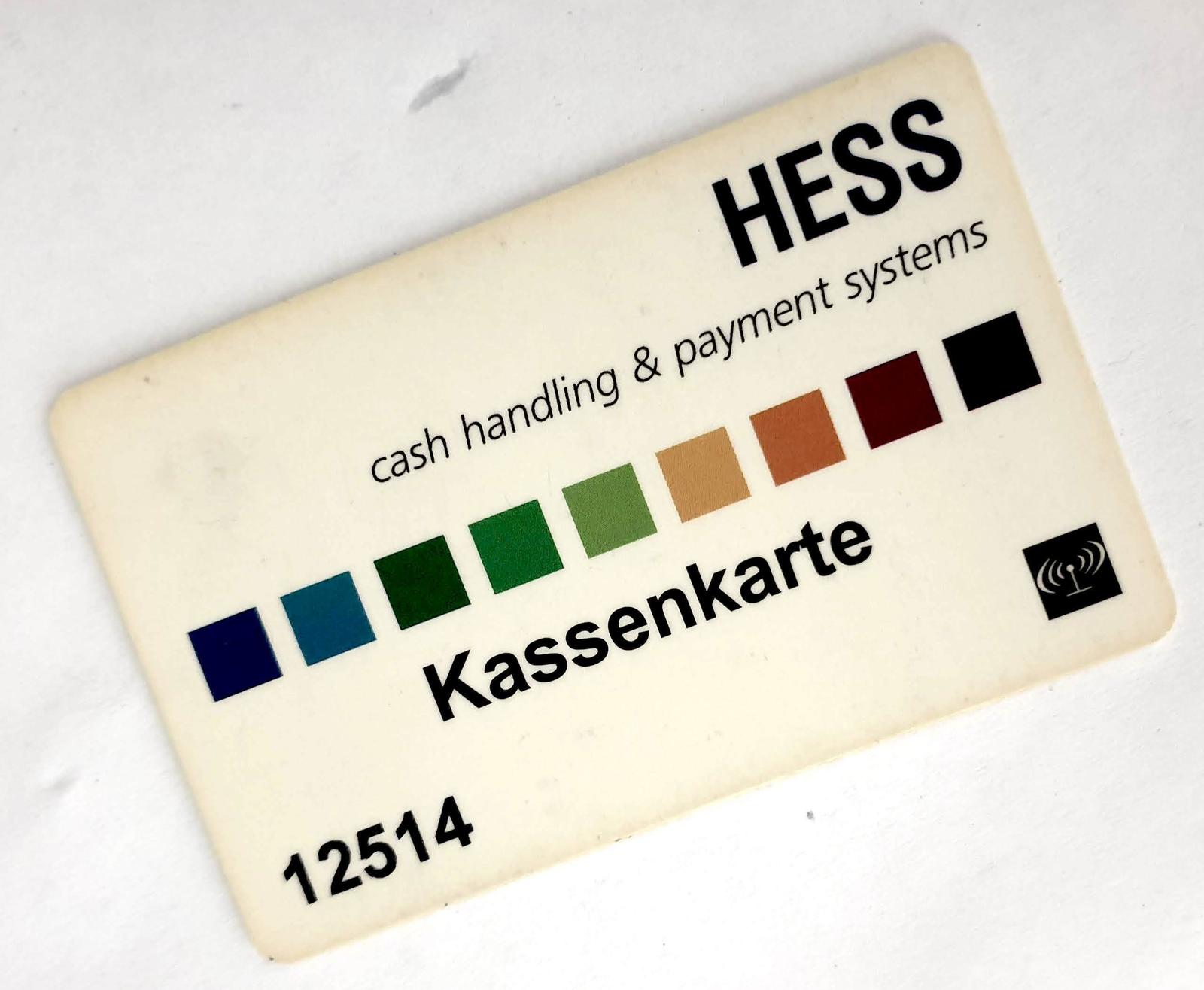
During the appointment, the employee will give you a plastic card. Bring this card to the payment machines downstairs, put it in the machine, and pay the registration fee. Take the receipt, and bring it back to the employee.

The employee will put a new sticker on your licence plate, and give it back to you. If the vehicle is already registered in the same city, you can use the old licence plate.

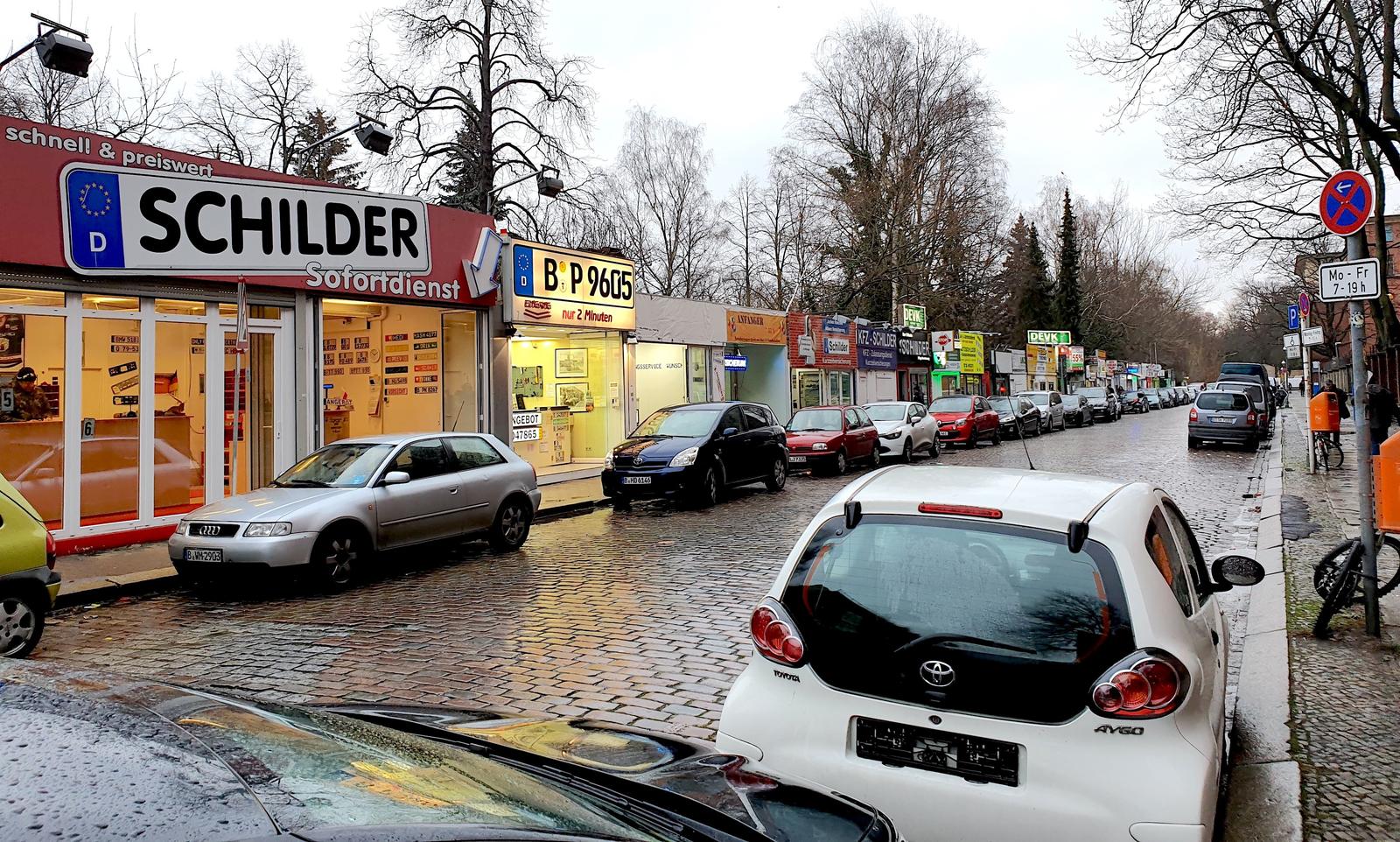
If you need a new licence plate, you can go to one of the kiosks in front of the Kfz-Zulassungsstelle. They will make a new plate for you. This costs around €20, and it only takes a few minutes.
Vehicle registration service
You can pay a Zulassungsdienst to register your vehicle. It’s faster and easier. It costs around €150. If you can’t register your vehicle online, and you want to drive it as soon as possible, it’s worth it.
The biggest registration service is Kroschke. Dealerships usually offer this service too.
Once your vehicle is registered, you can drive it.
What to do next
Parking pass
In some parts of Berlin, you need a Bewohnerparkausweis to park your vehicle near your home.
Vehicle tax
You must pay vehicle tax. You get a Kraftfahrzeugsteuerbescheid by post every year. If you gave a direct debit authorisation when you registered your vehicle, they automatically take the money from your bank account a month later.
Vehicle inspections
On your registration papers, you can see when your next inspection is due (Nächste HU). If you get caught driving with an overdue inspection, you get a small fine.7 If it’s less than 8 months overdue, it’s not a big problem.
Cheaper car insurance
Most car insurance contracts are for 1 year. Every year, 1 or 2 months before your contract expires, look for cheaper car insurance. Add it to your calendar.
Use Verivox or Tarifcheck to compare vehicle insurance options. If you find something cheaper, cancel your current contract, and switch to the cheaper insurance. You can save a lot of money by doing this.
How to get cheaper car insurance
Sources and footnotes
-
autokaufrecht-frankfurt.de (2026), spiegel.de ⤴
-
Personal experience (2018) ⤴
-
ADAC (2025), bussgeldkatalog.org (2026) ⤴